

Willie Walsh, one of the most formidable figures in modern aviation, is set to leave his role as Director General of the International Air Transport Association and become chief executive of IndiGo, in a move that instantly ranks among the most consequential executive appointments in the airline industry this year.
The significance of the move extends well beyond a routine leadership change. Walsh is not simply another airline executive. Over more than four decades, he has built a reputation as one of aviation’s hardest operators: a former Aer Lingus pilot who went on to lead Aer Lingus through restructuring, then British Airways, and later International Airlines Group, where he helped shape one of Europe’s most powerful airline groups following the merger of British Airways and Iberia. Since joining IATA in April 2021, he has been a blunt, highly visible voice on post-pandemic recovery, airport charges, regulation and the industry’s net-zero pathway.

The airline’s own announcement describes Walsh as an “exceptional global aviation leader” and says he will oversee overall management and strategic direction, with a focus on operational performance, network and commercial strategy, and customer experience. The document also highlights IndiGo’s scale, noting that the carrier now has a fleet of more than 400 aircraft, operates roughly 2,200 daily flights, serves more than 95 domestic and 40 international destinations, and carried 124 million customers in calendar 2025.
The appointment follows the departure of Pieter Elbers and comes after a turbulent period for IndiGo that included thousands of cancellations and regulatory scrutiny, making Walsh’s arrival as much a stabilisation play as a statement of intent. Reuters also noted that IndiGo holds about 65 per cent of India’s domestic market, underlining the scale of the platform Walsh is stepping into.
What makes this appointment even more meaningful is where it is happening. India is no longer merely a fast-growing aviation market; it is increasingly becoming one of the industry’s central power bases. IATA says India is already the world’s third-largest air transport market by departing origin-destination passenger traffic, behind only the United States and China. It also says approximately 174 million passengers travelled from and within India by air in 2024. Separately, IATA has said India is set to become the third-largest passenger market by 2027.
In that context, Walsh joining IndiGo feels less like an isolated appointment and more like a marker of where aviation’s strategic centre of gravity is shifting. India’s carriers are no longer simply buying aircraft and adding routes; they are attracting global heavyweight leadership to shape the next phase of expansion. That matters because it signals how seriously the market is now being viewed by the industry’s top tier. Walsh himself wrote last year that Delhi would become the “global aviation capital” during IATA’s 2025 annual gathering, a remark that now looks even more telling in hindsight.
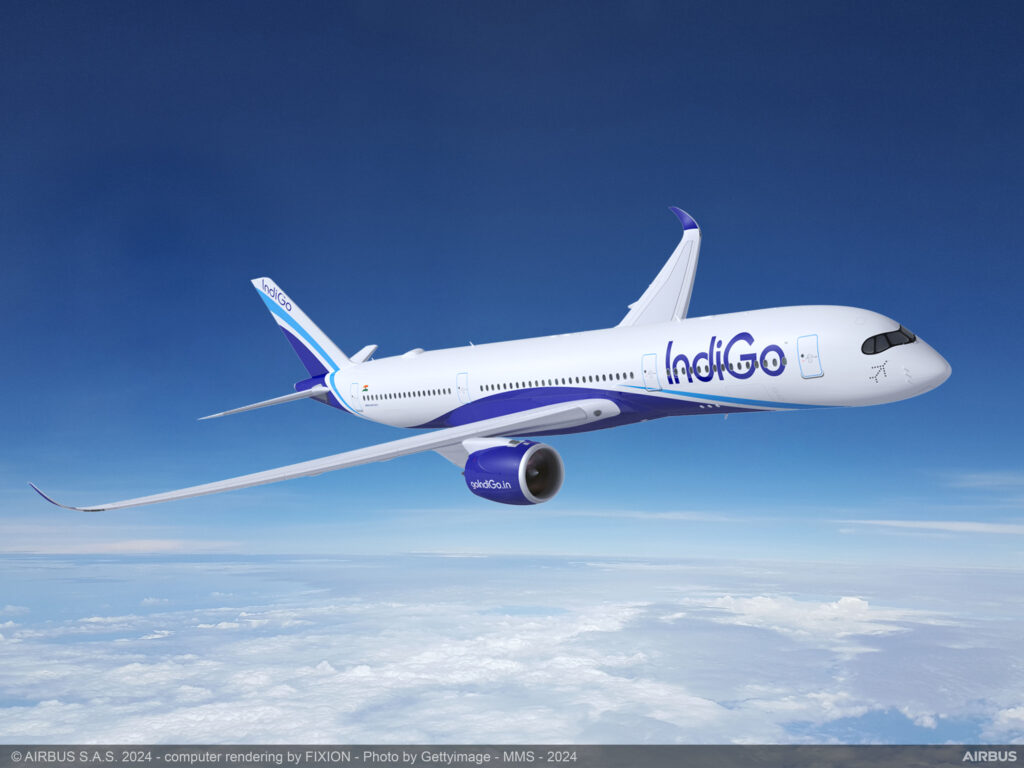
For IndiGo, the appointment is also about ambition. The recruitment of Walsh points to the airline’s desire to expand more rapidly on the global stage, particularly as it prepares to grow with new Airbus A321XLR and A350 aircraft. In other words, this is not simply about running India’s largest airline more efficiently. It is about preparing IndiGo for a larger international role at a time when India’s aviation story is becoming one of the defining themes in global air transport.
Walsh said in the company statement that he was “delighted” to lead IndiGo, praising the airline’s foundation, vision and reputation, and saying it was well positioned to be “at the forefront” of a rapidly evolving aviation landscape. For an industry that watches talent moves closely, this is a headline appointment with unmistakable meaning: one of aviation’s most battle-tested leaders is betting his next chapter on India.