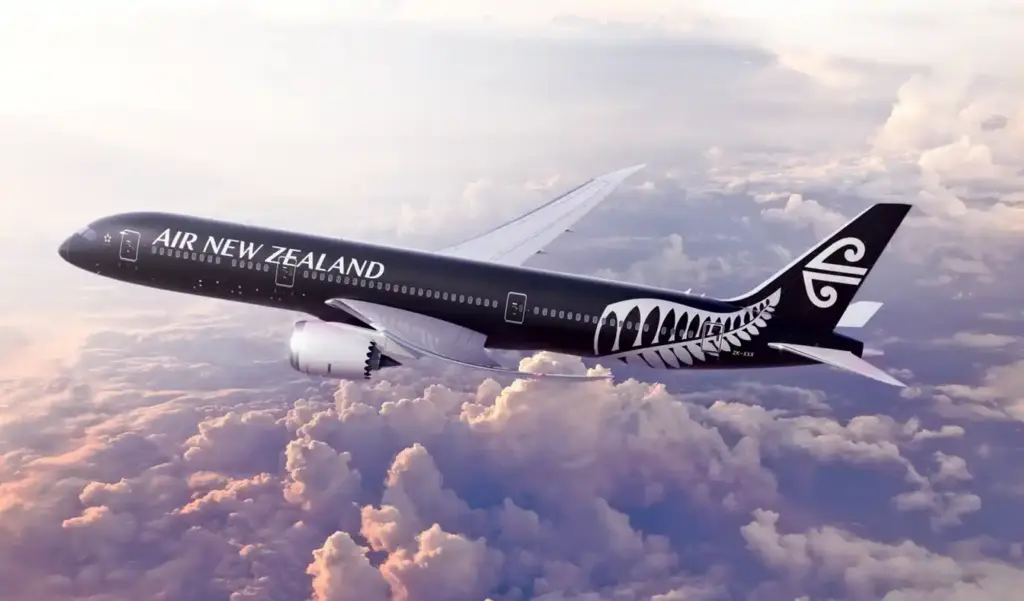
Travel agents who push back on airline compensation caps now have the regulator’s position to point to. The Commerce Commission says it will file Fair Trading Act charges against Air New Zealand, alleging the national carrier misled passengers about their rights when flights were delayed or cancelled for reasons within its control.
The Commission alleges the airline told passengers compensation was strictly capped below the statutory limits and made statements limiting its liability for some reimbursements, likely from January 2024. The charges will be filed in the Auckland District Court. Neither the number of charges nor the number of passengers affected has been released. Under the Civil Aviation Act, passengers on a domestic flight disrupted for reasons within the airline’s control, such as an engineering fault or crew sickness, can claim reasonable costs, including meals, accommodation and getting to their destination, up to 10 times the ticket price. International claims fall under the Montreal Convention, which sets its own limits and lets an airline avoid liability if it shows it took all reasonable measures to avoid the delay.
Commission deputy chair Anne Callinan said that in the Commission’s view, the statements led some passengers to wrongly assume they had no right to compensation, and legitimate claims were rejected. She said consumers had frequently raised concerns about the airline over the past five years.
Air New Zealand has apologised. Chief customer and digital officer Jeremy O’Brien said there were a small number of cases where communications were unclear or compensation policies were not applied as intended. The airline says a voluntary review of more than 62,000 claims found mistakes in fewer than one per cent, none of them intentional or systemic, and that affected customers have been contacted. It says it is disappointed the Commission has gone to court given those steps and will cooperate. It has not said how it will plead.
The Jetstar precedent
Air New Zealand is not the first airline the Commission has taken to court over compensation statements. In September 2025 Jetstar was fined $2.25 million after pleading guilty to 20 representative charges under the same section of the Fair Trading Act. Between January 2022 and March 2024 it told passengers on disrupted flights that compensation was not available beyond caps it had set itself. Judge Brooke Gibson said about 98,000 passengers were affected. The Commission had issued Jetstar compliance advice in 2015 and 2021, and sought a penalty at the higher end of the range, citing those warnings and an earlier prosecution in Australia. Jetstar has since paid more than $1 million to nearly 2,700 passengers.
The dates sit close together. Jetstar’s offending ran until March 2024, and the Commission says Air New Zealand’s alleged conduct likely began that January. When Consumer NZ complained about Jetstar in October 2022, it held up Air New Zealand as the contrast, saying the airline had updated its website and produced new guidelines for passengers on disrupted domestic flights. The Commission opened its Air New Zealand investigation in July 2024.
Across the Tasman and beyond
The Qantas Group has been here before. In 2019 Australia’s Federal Court ordered Jetstar to pay A$1.95 million for telling customers some fares could not be refunded and that consumer guarantees did not apply to its flights. Qantas, Virgin Australia and Tigerair gave the Australian Competition and Consumer Commission undertakings to change similar wording. On different conduct, Qantas was ordered in 2024 to pay A$100 million, on top of about A$20 million to more than 86,000 customers, for selling seats on flights it had already decided to cancel. The European Union deals with capped offers directly. EU261 sets fixed payments of €250 to €600 for long delays and cancellations, bars airlines from limiting or waiving those obligations, and lets passengers who accepted less because they were not correctly told their rights claim the difference.
A power not yet used
The Civil Aviation Act already lets the Government make regulations requiring airlines to tell passengers their rights. In September Associate Transport Minister James Meager opted instead for a voluntary charter developed with the airlines, saying it was preferable at this stage and regulation remained an option. Consumer NZ, whose research found nine in ten flyers are not fully aware of their rights and three quarters rely on the airline to tell them, wants the power used. Labour campaigned on automatic refunds for cancelled or significantly changed flights.
For agents, the first question on any disruption claim is the cause, because it decides whether the airline owes reasonable costs or the client falls back on travel insurance. The second is the figure. An airline’s offer is not the legal ceiling. On a domestic flight disrupted for reasons within the airline’s control, that ceiling is 10 times the fare.