


There was a time when managing the finances of a holiday meant exchanging cash at the airport, carrying a credit card with a 3% foreign transaction fee and vaguely hoping the airline loyalty points added up to something eventually. That time has not entirely passed but for a growing number of high-value travellers, it is giving way to something considerably more deliberate.
Travel fintech, the integration of financial technology into travel planning, booking and payment is maturing fast. And while much of the public conversation around it focuses on buy now, pay later schemes and Gen Z booking habits, the more consequential shift may be happening at the other end of the market, among travellers for whom the financial architecture of a trip is as carefully considered as the itinerary itself.
Who this is really about
Affluent travellers broadly defined as households earning above $200,000 USD annually account for roughly one in every four dollars spent on travel globally, despite representing a small fraction of the travelling population. This is the segment that books business and first class seats, stays at Virtuoso-affiliated properties and takes multiple long-haul trips per year. They are not financially stretched. But they are, increasingly, financially engaged. The shift is partly generational. Younger affluent travellers are more likely to treat travel spending as a financial decision optimising across credit card products, timing currency conversions and understanding the real value of loyalty currencies rather than simply absorbing costs. The tools now available to support that approach have made it worth doing.
Flexible payments: beyond BNPL
Buy now, pay later has become a fixture of the travel booking landscape. One in five US travellers now uses some form of instalment payment for trips, and booking volumes for BNPL travel products grew over 20% in 2024. Airlines including TAP Air Portugal have integrated Klarna directly into their checkout flows. Airbnb’s global rollout of deferred payment options contributed to an acceleration in nights booked through the final quarter of 2025. For budget-conscious travellers, the appeal is clear, it converts a large upfront payment into manageable monthly instalments. For high-value travellers, the dynamic is different. The relevant question is not affordability but opportunity cost and structured payment options offered by luxury operators allow capital to remain deployed elsewhere rather than tied up in a hotel deposit six months before check-in. Platforms designed specifically for the luxury end of the market, such as Flywire, have built their offering around this. Recognised as a preferred partner within the Virtuoso network which spans 2,300 suppliers generating $35 billion in annual sales, Flywire handles digital contracts, deposit collection and multi-currency settlement for high-value hospitality operators. The operational sophistication of how a booking is processed matters to travellers spending at this level, and seamless payment infrastructure has become part of the product.
Points Optimisation: The gap between passive and active
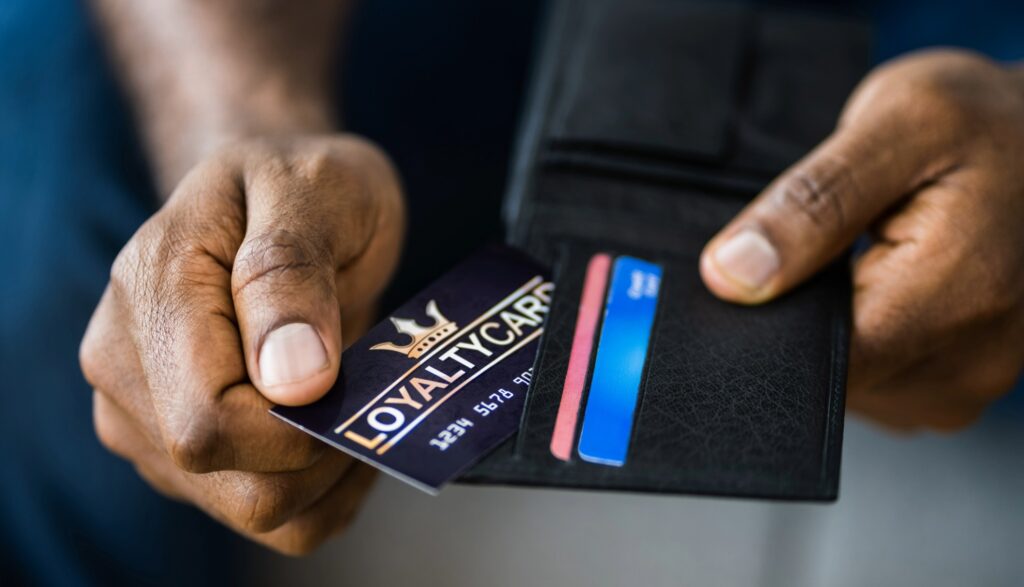
Loyalty programmes have existed for decades. What has changed is the sophistication with which engaged travellers now approach them. The American Express Platinum Card earns 5x Membership Rewards points on flights and prepaid hotel bookings, alongside access to more than 1,550 airport lounges globally. Chase Sapphire Reserve earns 3x points on dining and travel, with transfer partners spanning major international carriers. Capital One Venture X offers a simpler flat-rate structure for travellers who want premium perks without managing category optimisation across multiple products. But the real leverage for sophisticated users is in how points are deployed, not just earned. Flexible currency programmes, membership rewards, etc allow transfers to airline and hotel partners where the redemption value per point can be significantly higher than booking through the card’s own portal. A business class seat to Tokyo redeemed through a transfer partner may deliver three to four times the value of the same points used as a statement credit. The risk is stasis. Loyalty programme terms change usually in ways that reduce value so points that sit dormant depreciate. The financially astute approach is active: earn strategically, understand current valuations and redeem before the rules shift.
Forex: The quiet expensive problem
Currency conversion is where financially disengaged travellers lose money they do not notice losing. Airport currency counters and hotel desks typically apply margins of 5–8% over the interbank rate. A traditional credit card with a foreign transaction fee adds another 2–3% on top of every overseas purchase. On a significant multi-destination trip, this compounds into a meaningful and entirely avoidable cost. Multi-currency digital wallets have largely solved this for travellers willing to use them. Platforms such as Wise allow users to hold balances in 40+ currencies, convert at rates close to the mid-market rate and spend via a linked card without the margins a traditional bank applies. Revolut offers similar functionality, with the addition of rate alerts that notify users when exchange rates move in their favour. For high-spend travellers moving across multiple currency zones a trip spanning Europe, Japan and Southeast Asia, for example timing conversions rather than defaulting to point-of-sale rates is a practical strategy with real financial return.
What It Means for the Agent Relationship
The growth of travel fintech does not erode the agent’s position with affluent clients but it does raise the bar. Clients who manage their travel finances actively increasingly expect their agent to understand the financial dimensions of a booking, not just the logistics. That means knowing which payment structures are available through preferred operators, how a client’s points programme interacts with the carriers and hotels on a given itinerary, and where currency exposure exists on a multi-leg trip. Payment security matters too. Research indicates that payment friction is the single biggest pain point in the booking process for more than one in three travellers and that concern scales with the value of the transaction. The itinerary has always been the product. For a growing number of high-value travellers, how the trip is paid for has become part of it.