

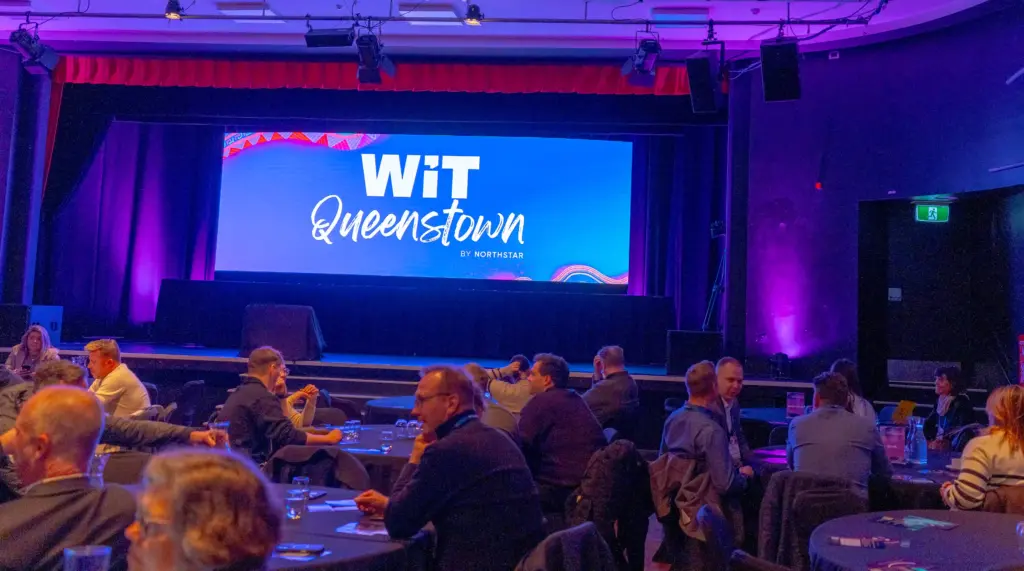
The inaugural Web in Travel (WiT) conference wrapped up in Queenstown this week, drawing global and Asia-Pacific travel technology heavyweights to the resort town and handing New Zealand’s adventure capital a credible platform to position itself as the country’s emerging technology hub.
Founded in 2005 by Yeoh Siew Hoon, WiT is a media, events and community company built around travel and hospitality technology across Asia-Pacific. Alongside its flagship Singapore event and a growing roster of regional editions, it has become a fixture for the startups, investors and executives who shape where the industry spends its money. Bringing that machinery to Queenstown for a first New Zealand outing is a statement in itself, and the calibre of the room proved the point. Airlines, airports, online travel agencies, hotel groups and a healthy contingent of self-described tech nerds spent two days working through a single question: what does the next 20 years of travel actually look like.
The answer, across aviation, airports and hotels, kept circling back to the same tension. The technology is largely ready. Trust, governance and the will to share are not.
Aviation: cautious optimism and a long shot from the south
In conversation with Roger Sharp, Air New Zealand chief executive Nikhil Ravishankar was quietly optimistic about the airline regaining lost ground now that its aircraft are returning to the skies after the engine issues that grounded part of the fleet. He pointed to the Sky Nest sleep pods the carrier has been promoting for its incoming 787s, though he was candid that delivery dates have slipped repeatedly and the schedule remains unstable. Notably absent was any detail on how Air New Zealand intends to rebuild the international route network and recapture share it has ceded to Qantas.
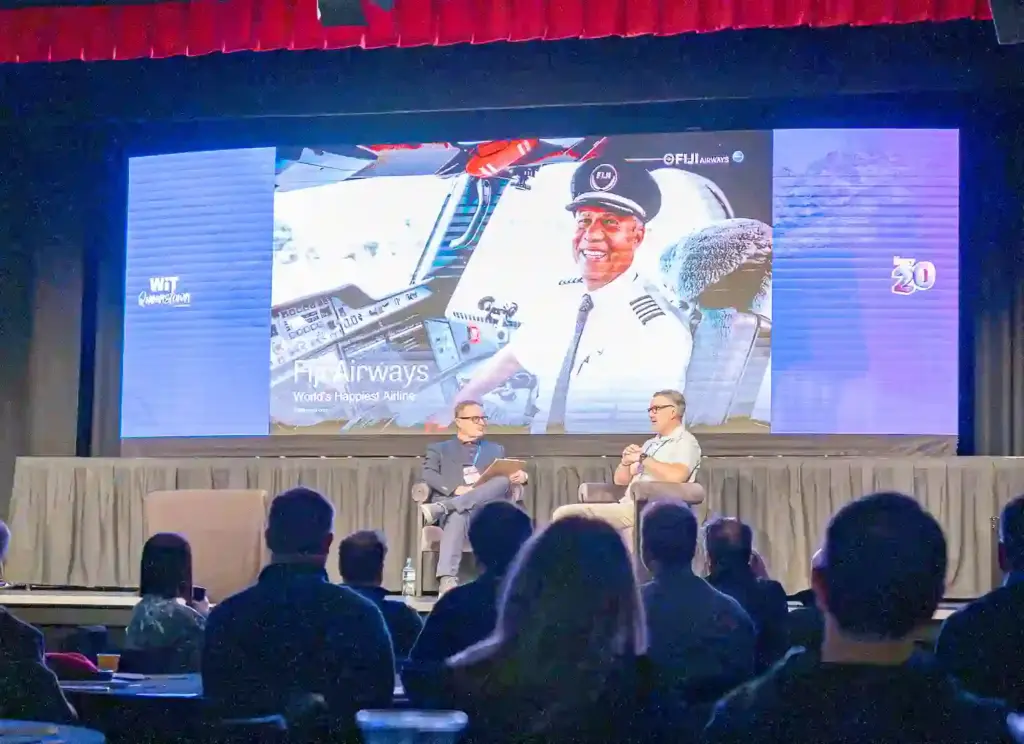
Fiji Airways offered the more eye-catching prospect. Recently appointed chief executive Paul Scurrah floated the possibility of launching services out of Queenstown, routing through Nadi to the United States rather than hubbing through Melbourne or Sydney. It would be the longest route ever flown from the South Island on the airline’s current Boeing 737 configuration, and Fiji Airways is in discussions with Boeing over whether the aircraft can do it. Scurrah was careful not to oversell it. “I can’t promise anything at this stage, but we are looking at it,” he said. For a Queenstown airport with ambitions beyond the trans-Tasman shuttle, even a maybe is worth watching.
Airports: the technology is here, the trust is not
The airport sessions delivered the conference’s sharpest theme. The biometric and digital identity technology needed to transform the passenger journey is largely available today. What is holding it back is governance: unresolved questions about who owns passenger data, who manages it, and how multiple stakeholders with competing legal obligations can ever agree on the rules. The scale of that trust deficit was laid bare by a single example. A proof of concept to share real-time wildlife incident data between Brisbane Airport, Virgin and Qantas took eight months to organise, despite the information being non-competitive safety data that benefits everyone. If that is how long it takes to share bird strike reports, the industry’s wider data ambitions face a long road.
Where operators are getting on with it, the results are tangible. Auckland Airport uses traffic sensors on major motorways and feeder routes to predict passenger show-up profiles at check-in. When congestion or a crash disrupts the run to the airport, operations can adjust counter setups, kiosks, lane openings and queuing in advance to absorb late-arriving passengers. It is a working example of the “total airport management” approach several speakers advocated: a single operational view across flights, bags and people, rather than point solutions that simply shunt the bottleneck somewhere else.
Panellists pushed for a more fundamental rethink. Airports are currently designed around airport functions, with passengers routed through them. The next generation should flip that, designing around passenger intent and, where possible, taking the airport to the passenger. The proposed enabler is decentralised digital identity, built on verifiable credentials, digital wallets and readers at each touchpoint, so travellers own their identity and share it by consent rather than surrendering it afresh at every airport.
One caution ran through the optimism. Passenger behaviour is not universal. Dutch travellers at Schiphol comply with gate calls instantly and wait at the gate, prompting pop-up duty-free. Australian passengers treat a gate call as a cue for one more drink. Solutions, the room agreed, have to be designed per airport, country and culture, and technology should serve human connection rather than engineer it out.
Hotels: let the host host
Hospitality’s sessions opened with an admission that the sector is underfunded on technology and lagging industries facing identical problems. Speakers urged hotels to borrow from banking, retail, luxury and insurance, which have invested far more in digital workers, margin optimisation and clearing technical debt.
The framing that landed hardest was “let the host host”. Technology’s job, delegates argued, is to strip out operational friction so staff can return to being genuine hosts rather than process managers, with AI-powered digital assistants supporting frontline workers rather than replacing them. A reality check cut through the futurism. A 2035 hotel room prototype loaded with advanced technology drew guest feedback that was almost humbling: what people cared about most was quality sleep and good water pressure. Technology, the lesson went, must enhance the fundamentals, not distract from them.
The competitive stakes are shifting to distribution. As AI embeds itself in how travellers decide and book, several speakers argued the industry’s future advantage will hinge on who controls distribution in an AI-driven world, forcing hotels to stay visible, differentiated and actionable inside AI environments. AI has also made pricing almost totally transparent, letting travellers compare rates instantly and exposing any inconsistency, so hotels must own their pricing space or be caught out. And the product itself is set to diversify well beyond the traditional room, with cabins, tiny homes and other formats meeting demand for distinctive experiences, even as customer-centricity stays constant.
The Queenstown question
For a first New Zealand edition, WiT chose its venue shrewdly. Queenstown spent two days as the room where the region’s most serious travel-technology conversations were happening, and a town that trades on being a destination got to be the place the industry came to think about its future. Whether that translates into Queenstown becoming a genuine technology hub, or a Fiji Airways route ever leaves the drawing board, is the harder question. But the resort town has served notice that its ambitions now run well beyond the ski season.