


Air New Zealand has reported a loss before taxation of $336 million for the 2026 financial year, compared with earnings before taxation of $164 million in the restated prior year. The net loss after taxation was $242 million.
Total revenue rose 3.9 percent to $7.0 billion and passenger revenue rose 4.8 percent to $6.1 billion. Operating cash flow fell to $819 million from $940 million a year earlier. Capacity measured in available seat kilometres rose 1.3 percent as grounded aircraft returned to service, partly offset by capacity reductions made in response to elevated fuel prices. Group revenue per available seat kilometre rose 3.4 percent. No final dividend was declared.
The result sits slightly better than the range the airline flagged to the market in May, when it guided to a loss before taxation of between $340 million and $390 million.
That range was itself the third position the airline had taken in four months. In February, reporting a first half loss before taxation of $59 million, Air New Zealand told the market that second half earnings would be broadly in line with or modestly below the first half, on an assumed average jet fuel price of US$85 a barrel. The assumption did not survive the month. Jet fuel prices rose sharply as the Middle East conflict escalated, the airline withdrew its earnings guidance, and it subsequently removed around five percent of flights, largely off peak services on higher frequency routes, with those reductions extended through to late July.
Jet fuel averaged US$111 a barrel across the 2026 financial year against US$88 in 2025. The airline estimates the conflict added $328 million to its fuel bill compared with what it had expected going into the second half, reduced to $205 million after hedging and to $135 million at the pre taxation line once fare adjustments and capacity cuts were applied.
Three further factors shaped the result. Engine availability issues affecting Rolls Royce Trent 1000 and Pratt and Whitney PW1100 powerplants cost an estimated $190 million through lost capacity, additional lease and engine costs and lower fleet utilisation. Aviation system charges across New Zealand and offshore ports reached $1.2 billion, an increase of $142 million on 2025. Maintenance costs rose $139 million excluding foreign exchange in what the airline describes as a peak maintenance year.
Chief executive Nikhil Ravishankar said the engine constraints that have limited the network are now substantially behind the airline, with aircraft availability improving through the end of the financial year. On time performance improved from 77.5 percent in 2025 to 84.0 percent in the second half. Nine of the 14 Boeing 787s have been retrofitted, with the remainder due by November.
Air New Zealand has not issued earnings guidance for the 2027 financial year, citing jet fuel currently trading around US$150 a barrel. It expects a residual engine related impact of $70 million to $90 million next year, maintenance costs $50 million to $100 million lower than 2026, and airport charges rising by upwards of 10 percent at some ports. A further $135 million in annualised savings has been identified from 2027, including the $100 million disclosed in May.
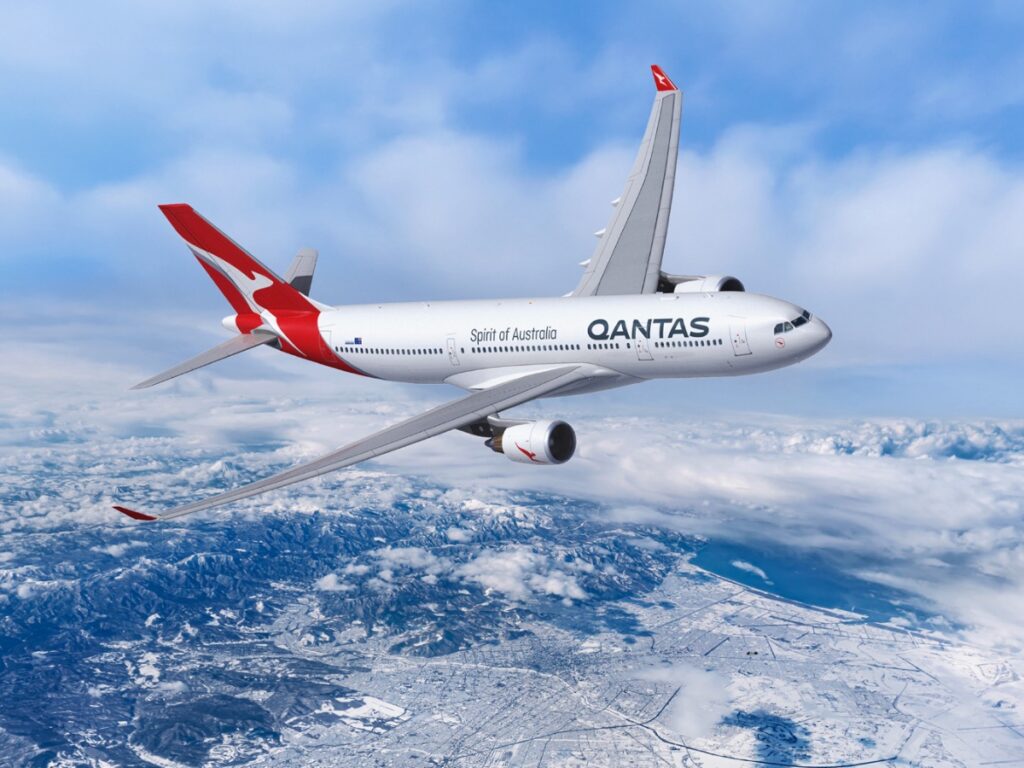
Across the Tasman, Qantas Group reported an underlying profit before tax of A$2.06 billion for the year to 30 June 2026, absorbing a net Middle East impact of roughly A$420 million. The group declared a final dividend of 19.8 cents a share, took delivery of 17 new aircraft and launched 23 new routes across Qantas and Jetstar. Loyalty revenue and earnings grew 12 percent.
The divergence is most visible in New Zealand capacity. Qantas Group added close to 800,000 additional seats across the Tasman in the 2026 financial year. Auckland Airport reported Qantas lifting Auckland to Australia seat capacity 7.3 percent and Jetstar 4 percent in the first half. Qantas placed its A220 on Brisbane to Wellington in February, its first international deployment of the type, and launched Gold Coast to Auckland three times weekly as the only carrier offering business class on the route. Jetstar added Brisbane to Queenstown for the snow season and lifted Sydney to Auckland to 12 weekly services.
On Pacific Islands flying, Qantas entered a market Air New Zealand has long led. Auckland to Apia began with three weekly Boeing 737 services, the carrier’s first international route from New Zealand to the Pacific, alongside a Sydney to Apia service routed via Auckland. .
The practical position entering the 2027 selling year is a competitor adding seats and routes on the Tasman and into the Pacific while the national carrier holds capacity discipline and declines to forecast earnings. Air New Zealand pointed to strong forward bookings into New Zealand as a positive signal for inbound tourism.